How to reach Kondana Caves from Karjat station
Split the journey into a road transfer to Kondhane village and a separate walk to the caves. The Google Maps road snapshot from Karjat Junction to Kondhane village is about 13.5 km, checked September 30, 2026. This is not a 13.5 km walking route to the cave entrance. View the station-to-village road route.
Arrange an auto-rickshaw or cab to the agreed village drop-off, then confirm the current trail entrance locally. Our existing trail guidance allows roughly 45–60 minutes for the walk; that is a planning estimate, not a guaranteed duration. Terrain, pace, rain and the exact drop-off change it. Share the pickup point with the driver and agree the return arrangement before starting.
Carry water and grippy footwear. Do not cross flowing water or continue onto a closed/slippery route just because the caves are nearby on a map. Use the Karjat arrival guide for the rail or road journey into town.
Introduction & Overview
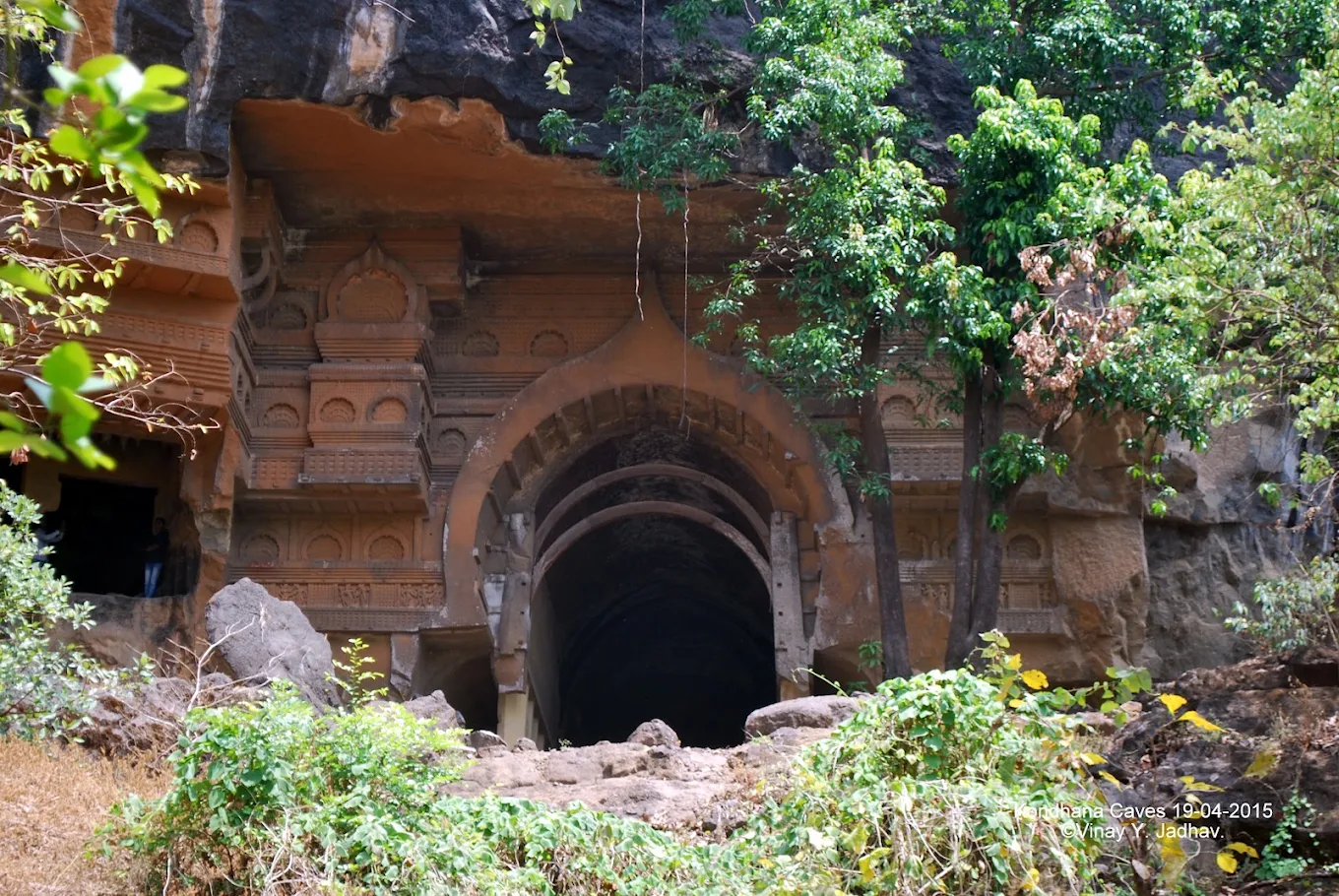
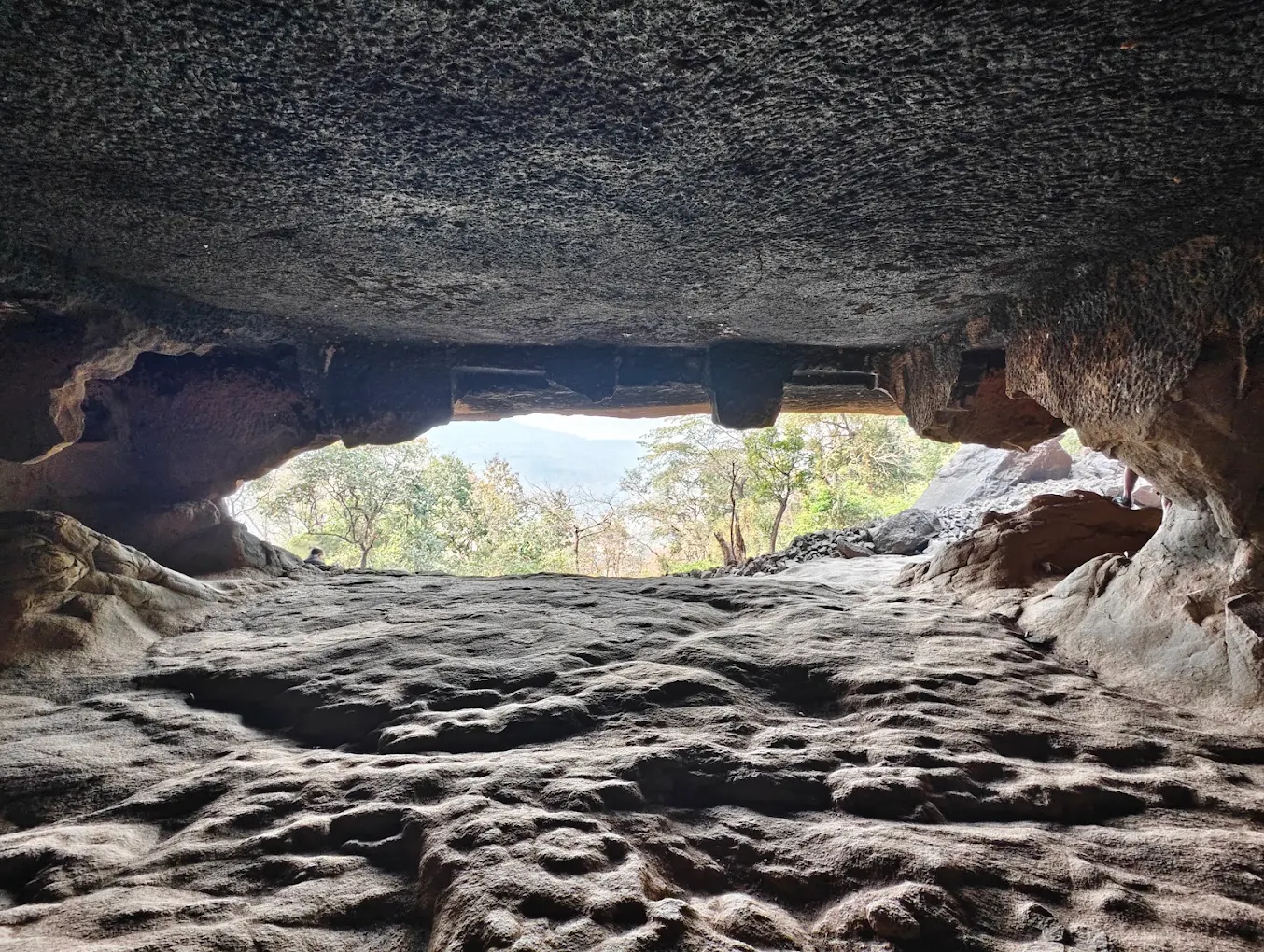
Kondana Caves (also called Kondhane Caves) are a group of 16 ancient rock-cut caves carved into a green hillside. They are located near the small village of Kondhane, about 15 kilometers from the town of Karjat.
These caves sit in the middle of a thick forest. During the rainy season, small mountain streams flow down the cliffs, and water falls directly over the front of the caves. It is one of the most popular day trips for travelers who love nature, history, and easy walking trails.
History & Cultural Background
These caves are very old. Buddhist monks carved them out of solid basalt rock more than 2,100 years ago, around the 1st century BC. They belong to the early period of Buddhism (known as the Hinayana period).
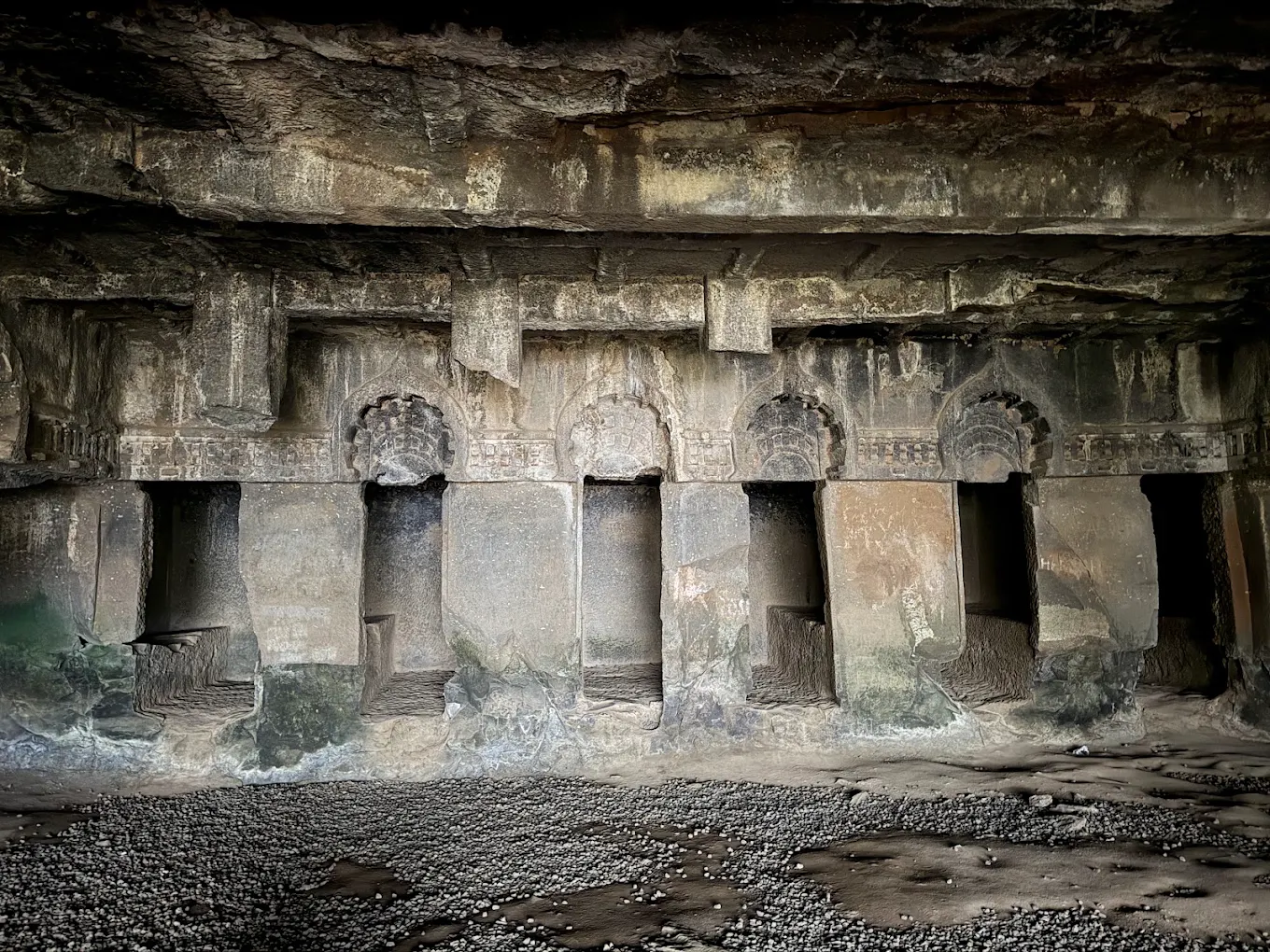
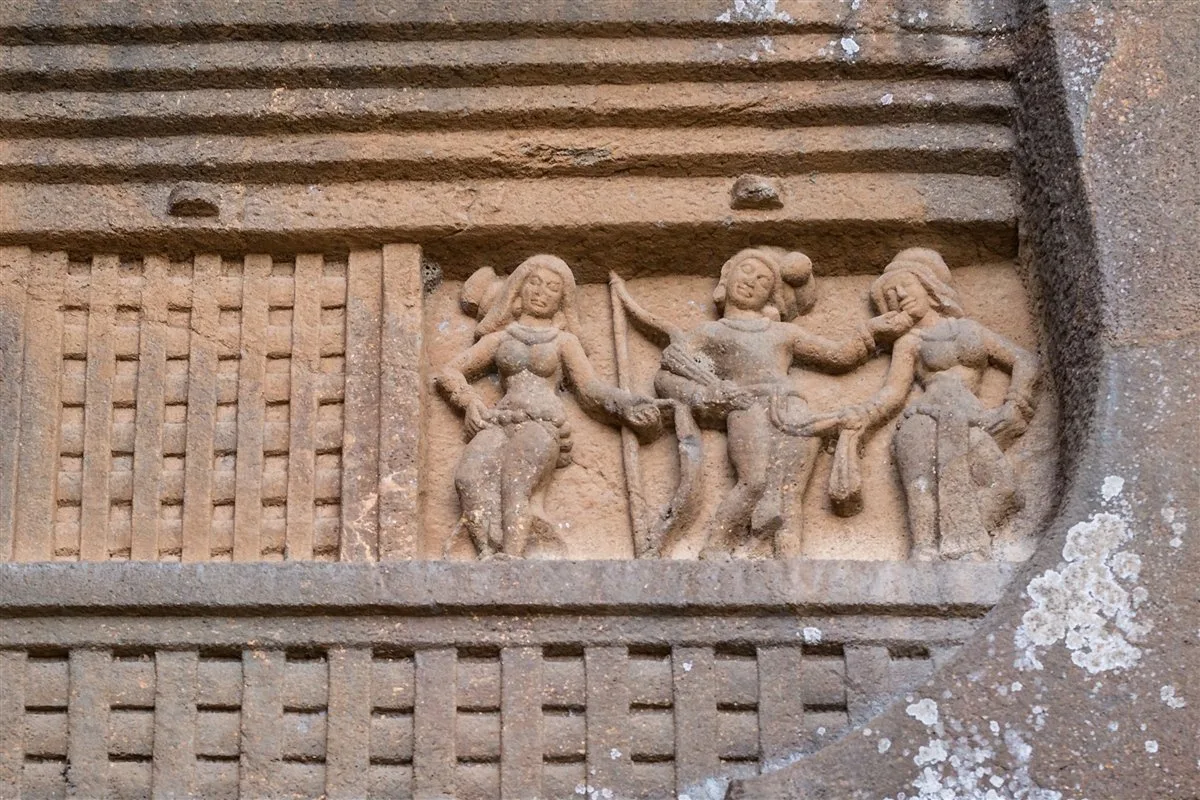
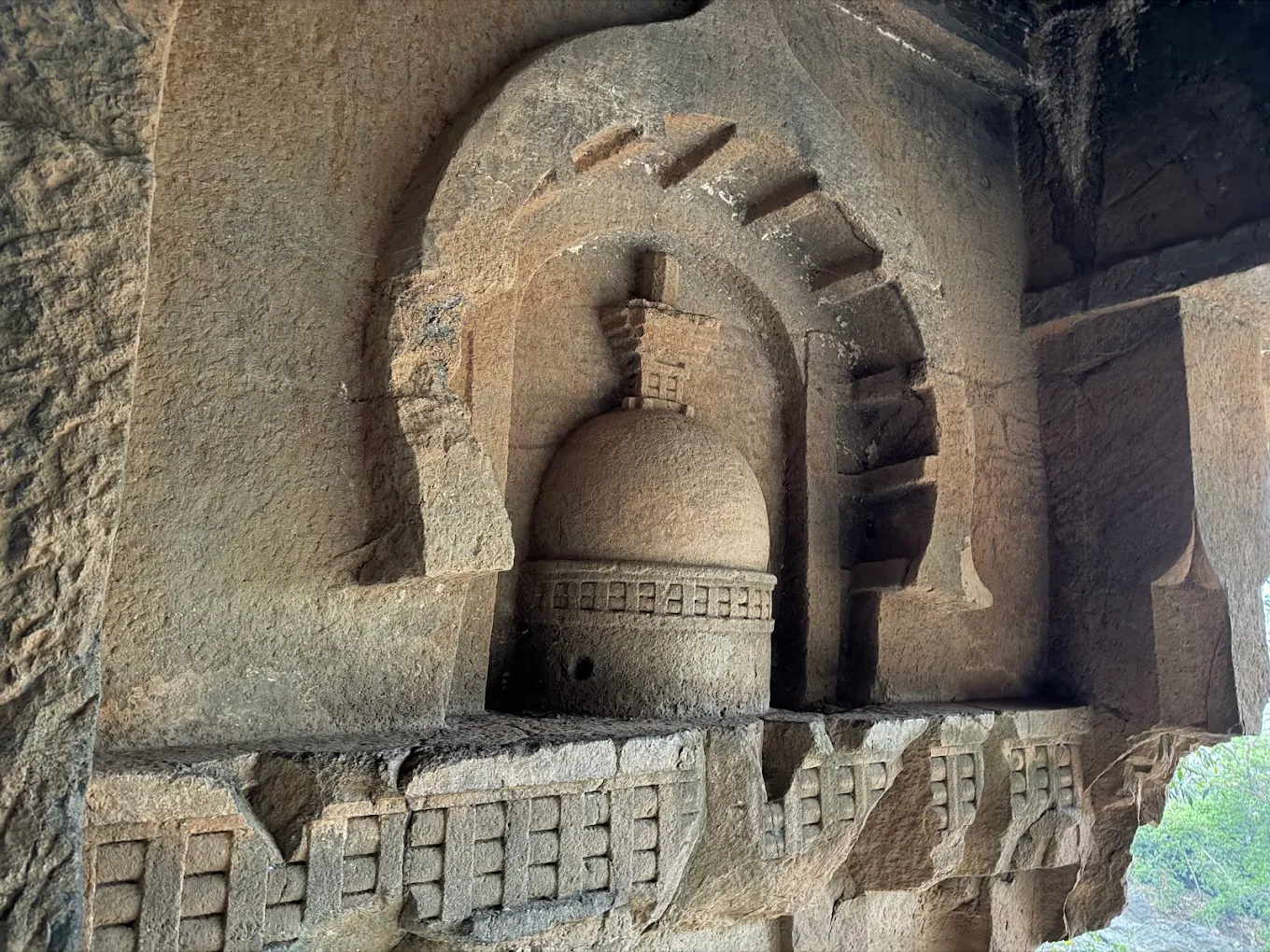
The complex includes one large prayer hall (called a Chaitya) and several living quarters (called Viharas) where monks lived, studied, and meditated. Inside, you can still see an ancient stone stupa, carved pillars, and figures of men and women carved into the rock. In the early 1900s, a strong earthquake damaged the front pillars of the prayer hall, but the inner chambers and ancient stone inscriptions are still well preserved.
When to Visit
- • Monsoon (Jul – Sep): Best time to see the waterfall dropping right over the cave entrance. The hills are bright green, and the air is cool and misty.
- • Winter (Oct – Feb): Ideal for comfortable walking. Clear skies, pleasant weather, and dry forest trails.
- • Summer (Mar – May): Not recommended. The weather is hot and dry, with empty streams.
Key Highlights & What to See
The Main Prayer Hall
Step inside the large arched cave to see the stone stupa and ancient curved ceiling design.
Ancient Rock Carvings
Spot detailed sculptures of ancient dancers, musicians, and traditional symbols on outer walls.
The Cave Waterfall
In the monsoon, stand behind the falling water sheet without getting completely soaked.
Peaceful Forest Walk
The path crosses green jungle, wooden bridges, and shallow mountain water streams.
Helpful Tips for Visitors
- Difficulty: Easy to moderate. The walk from the parking area to the caves takes about 45 to 60 minutes.
- Footwear: Wear sports shoes or walking shoes with good grip. The rock steps can be slippery when wet.
- Food & Water: Small local food stalls in Kondhane village serve tea and snacks, but bring your own water bottle on the hike.