Introduction & Overview
Kataldhaar is a hidden waterfall located deep inside the Ulhas Valley, near the border between Karjat and Lonavala. The name "Kataldhaar" comes from the local Marathi words for "rock" (katal) and "stream/flow" (dhaar).
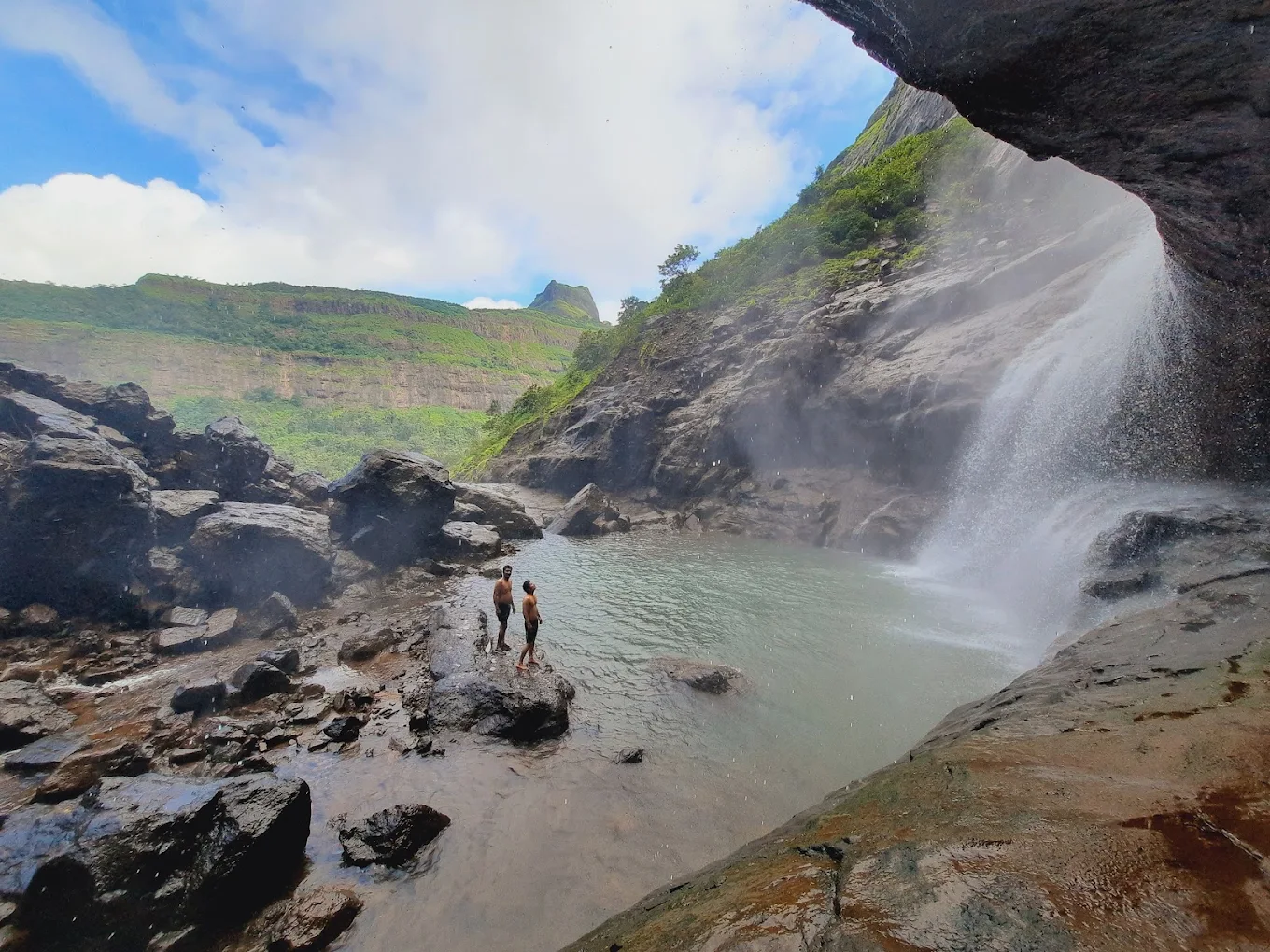
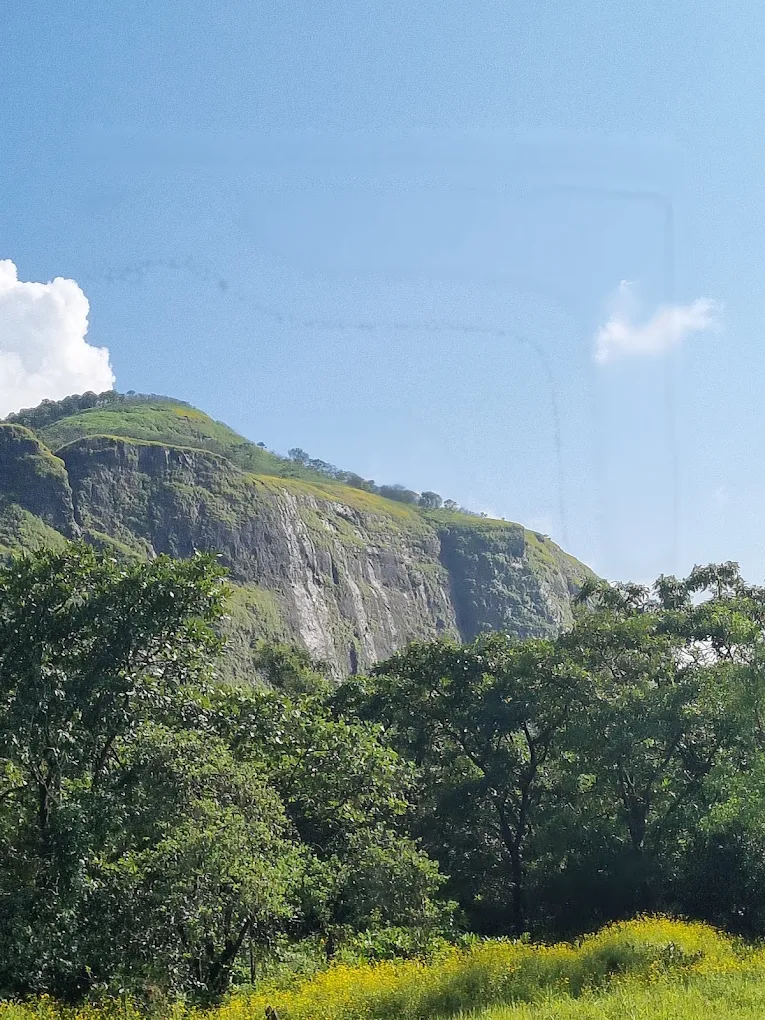
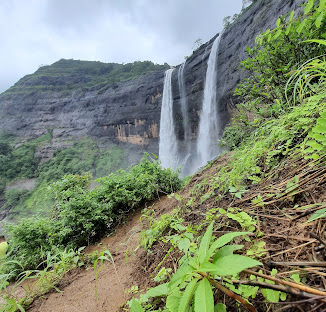
Unlike roadside waterfalls, Kataldhaar drops hundreds of feet down a sheer black cliff into a remote jungle canyon. Because there are no roads leading directly to it, reaching the waterfall requires a hike down through a wild, green forest.
History & Cultural Background
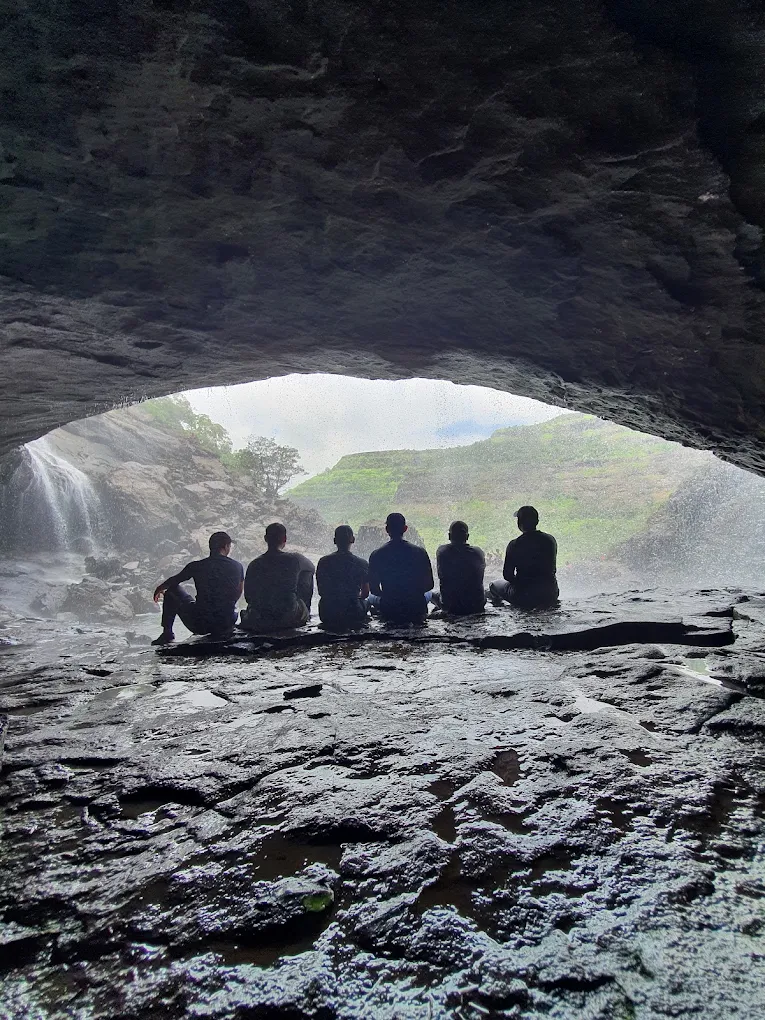
Kataldhaar is a pure natural wonder formed over millions of years by rain cutting through volcanic basalt rock. Over time, the force of the falling water has hollowed out the cliff face, creating a giant cave behind the falling stream.
The water from Kataldhaar flows down into the Ulhas River, which has supported local farming communities and wildlife in the valley for centuries. It remains largely undeveloped, keeping its wild and natural state.
When to Visit
- • Mid-Jul to Early Sep: The only time to see Kataldhaar. It is rain-fed and only flows during heavy monsoon rains.
- • Winter and Summer: The waterfall disappears completely, leaving a dry rocky riverbed canyon.
Key Highlights & What to See
The Eye-Shaped Cave
The cliff wall behind the fall forms a giant cavern that looks stunning in photos.
The 350-Foot Drop
The immense height creates a cloud of cool mist and a roar echoing through the valley.
Wild Forest Trail
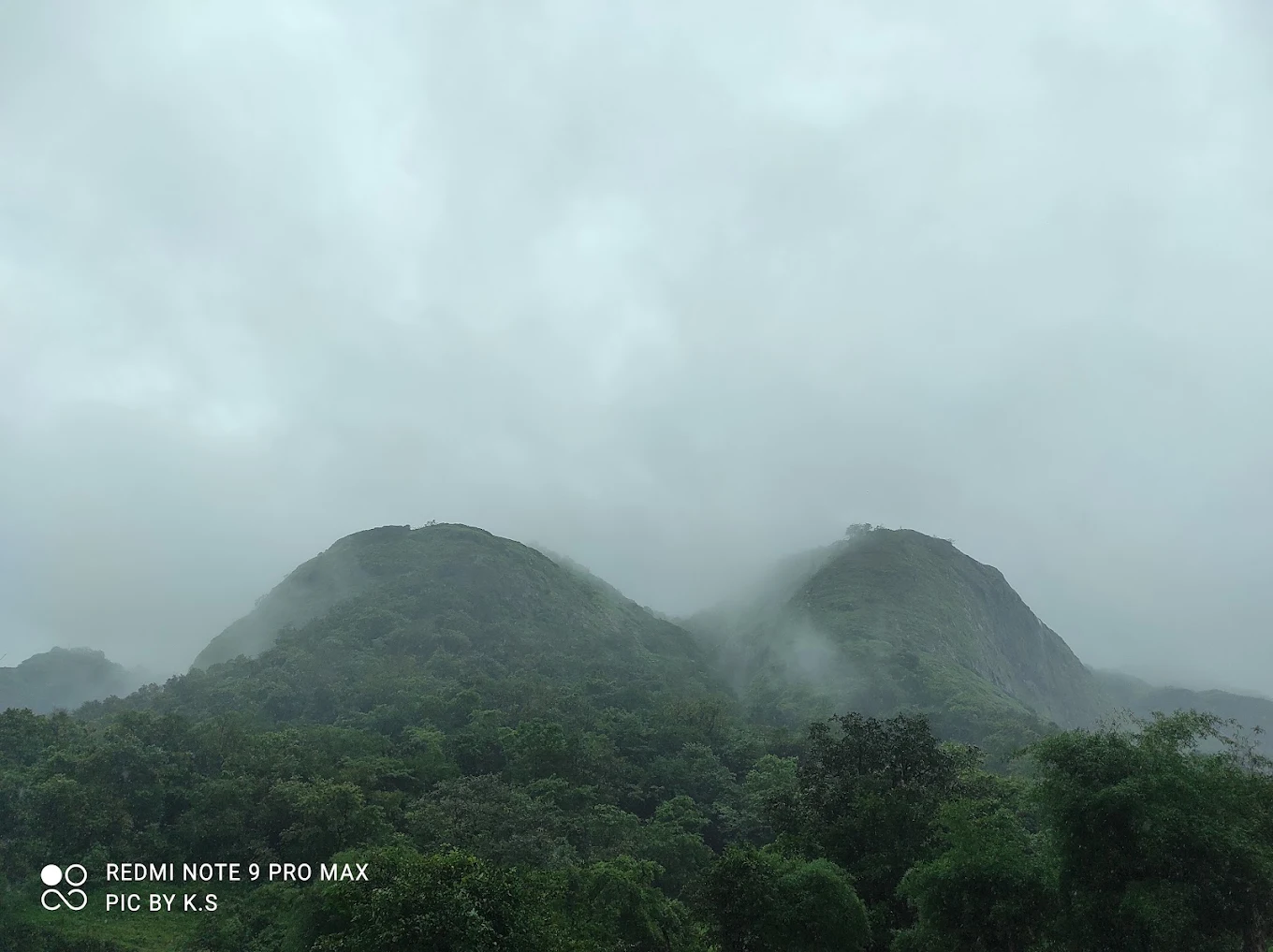
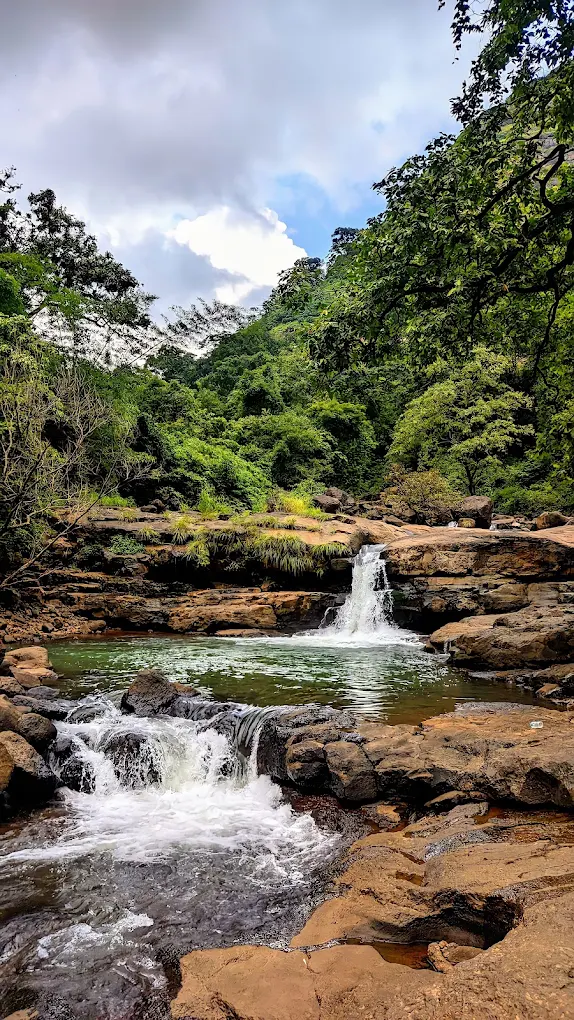
Hike under thick canopies, past moss-covered boulders, and across jungle streams.
Peace and Solitude
Because it requires hiking, it stays far less crowded than roadside attractions.
Helpful Tips for Visitors
- Difficulty: Moderate to Hard. The trail descends downhill first, meaning a steep uphill hike on the return.
- Guide Requirement: Always hire a local guide; trails are unmarked and easily obscured by fog.
- Clothing: Wear long pants and high socks to protect against brush, thorns, and small insects.