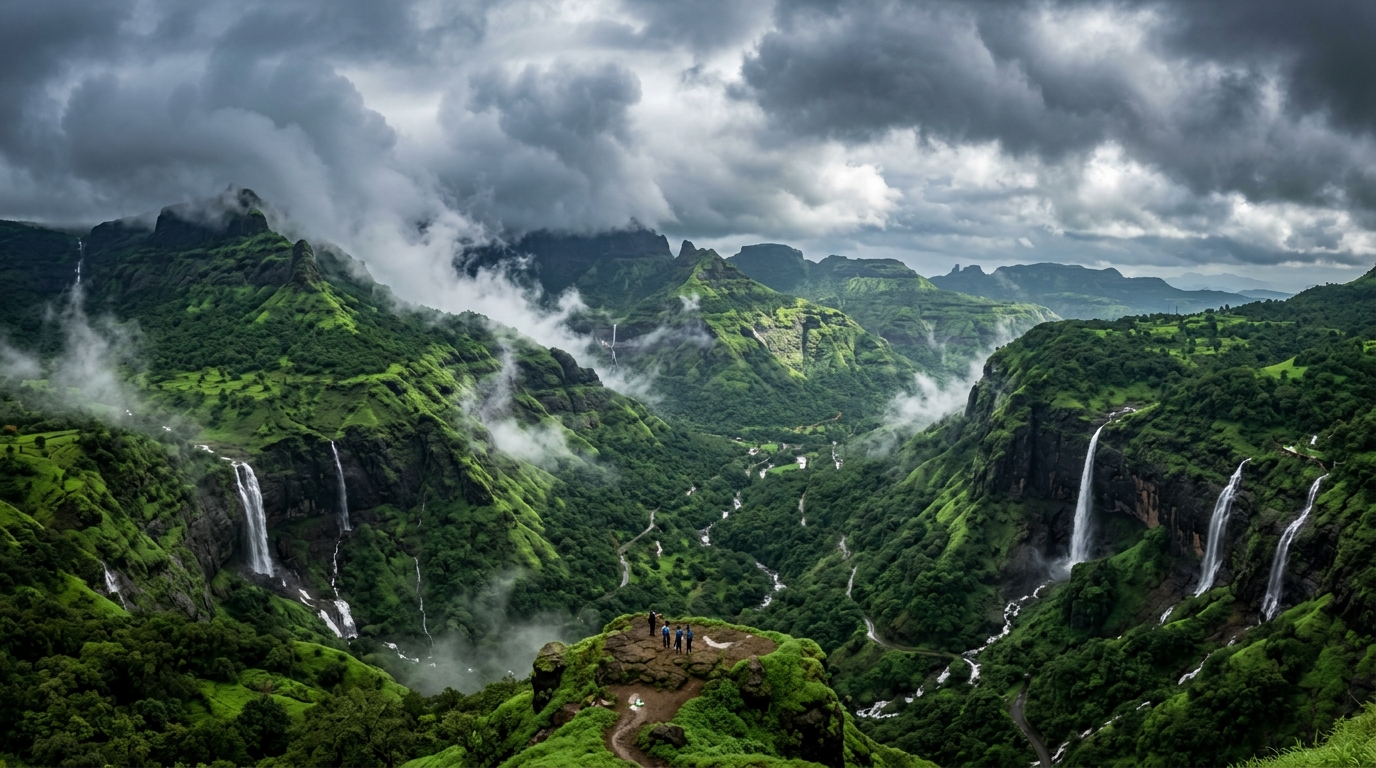
There is a magical moment just past dawn on a high ridge in Maharashtra when the world below disappears into a rolling ocean of white clouds. The wind blows up from the Konkan plains, carrying the scent of damp moss and wild herbs.
Trekking the Sahyadri Hills—the northern part of the Western Ghats—is an unforgettable adventure. It is a raw, rugged journey across ancient volcanic plateaus, steep cliffs, and living history.
Whether you are an experienced trekker climbing a rock face or a road-tripper driving through foggy hairpin turns, here is everything you need to know about exploring the Sahyadris.
1. The Magic of Sahyadri Monsoons
Geologically, the Sahyadri range is made of step-like volcanic rock formations known as the Deccan Traps.
During the dry months, these mountains are golden and sun-scorched. But when the southwest monsoon arrives in mid-June, they completely transform:
- Dry rock faces are covered in bright green moss.
- Hidden streams turn into roaring cascades (explore our guide to 10 Stunning Waterfalls in Karjat).
- Plateaus bloom with colorful wildflowers.
Hiking here during the monsoon is thrilling. You will experience sideways rain, waist-deep streams, and famous "reverse waterfalls"—where strong upward winds blow the water back into the sky at passes like Naneghat. Check out the Best Time to Visit Karjat & Western Ghats for detailed weather trends.
2. Top Historical Fort Treks in the Sahyadris
You cannot talk about the Sahyadris without mentioning history. These mountains were the heart of the Maratha Empire, shaped by the genius of Chhatrapati Shivaji Maharaj. Almost every major ridge features an ancient stone fort.
Top Fort Treks to Try:
- Rajgad (The King of Forts): Known for its beautiful Padmavati Machi and the winding Sanjivani Machi, walking on this fort feels like walking on the spine of a dragon.
- Harishchandragad: Famous for the Konkan Kada, a massive, curved cliff that drops over 1,800 feet into the plains below. Peering over the edge as mist rises is a breathtaking experience.
- Torna & Sinhagad: If you love endurance trekking, the long ridge walk between Sinhagad and Rajgad, or the steep climb up Torna (the tallest fort in Pune), will reward you with incredible valley views.
- Forts Near Karjat: For accessible historical summits near Mumbai and Pune, explore Kothaligad, Sondai, and Padargad in our guide to 12 Magnificent Forts Near Karjat. You can also read the complete Bhimashankar Trekking Guide.
3. Best Sahyadri Ghats for Road Trips
If you prefer driving over trekking, the mountain roads (ghats) of the Sahyadris offer some of the best road trips in India.
- Malshej Ghat: Famous for roadside waterfalls, thick fog, and pink flamingos that visit the local lakes in late summer.
- Tamhini Ghat: The scenic route connecting Pune to the Konkan coast. In July and August, it transforms into a lush green corridor with hundreds of waterfalls.
- Amboli & Bhor Ghat: Home to dense rainforests where you can spot exotic wildlife, hornbills, and endless valleys covered in clouds.
4. Local Maharashtrian Food on the Trail
One of the best parts of a Sahyadri trek is the warm hospitality found in base villages like Khireshwar, Samrad, or Gunjavane.
After hours of hiking in the rain, nothing beats sitting in a local villager's home enjoying authentic, rustic food cooked over a wood stove (chulha):
- Hot, thick Bhakri (flatbread made from jowar or bajra).
- Earthy Pithla (a warm, spiced chickpea flour curry) or country chicken curry.
- A spicy spoonful of Thecha (crushed green chilies and garlic).
- Sweet, ginger-heavy cutting chai to warm you up.
For curated restaurant stops on your way back from the trail, explore our guide to Saltt Restaurant in Karjat.
5. How to Plan Your Sahyadri Trek
The Best Time to Visit
- Monsoon (July – September): Best for waterfalls and lush greenery. Ideal for trekkers who don't mind getting wet.
- Autumn (October – November): Clear skies, green landscapes, and the famous wildflower bloom at the Kaas Plateau (a UNESCO World Heritage site).
- Winter (December – February): Chilly nights and clear sunrise views. Perfect for camping and multi-day treks. Check our Karjat Camping Guide for top lakeside and hillside spots.
- Pre-Monsoon (May – Early June): Visit Bhandardara or Purushwadi for the magical Fireflies Festival, where millions of glowing bugs light up the forest.
Essential Trekking Tips
- Wear Proper Shoes: Wet basalt rock is very slippery. Wear proper trekking shoes with deep rubber grips, not flat sneakers.
- Waterproof Your Gear: Line the inside of your backpack with heavy-duty garbage bags to protect your phone and clothes from heavy rain.
- Protect Against Leeches: If trekking in dense forests like Bhimashankar during the rains, carry salt or turmeric to easily remove leeches.
- Leave No Trace: Please do not leave plastic, wrappers, or bottles on the trails. Also, never pollute the ancient rock-cut water tanks (taankis) on the forts, as they provide drinking water for locals and trekkers.
Final Thoughts
The Sahyadri Hills may not have the snowy peaks of the Himalayas, but they offer something truly special: an intimate blend of spectacular nature and ancient history.
Once you stand atop a forgotten stone fortress and watch the clouds part over the green valleys below, you will understand why people keep coming back to the Western Ghats.